
AI Automation
AI API Costs: Practical Ways to Control LLM and Automation Expenses
Learn architectural strategies to cut LLM API bills: semantic caching, model tier routing, structured outputs, prompt compression, and tenant rate limiting.
On this page
Quick answer
Controlling AI and LLM API costs requires moving beyond direct, naive model calls to an engineered, multi-tier middleware architecture that treats tokens as billable compute units.
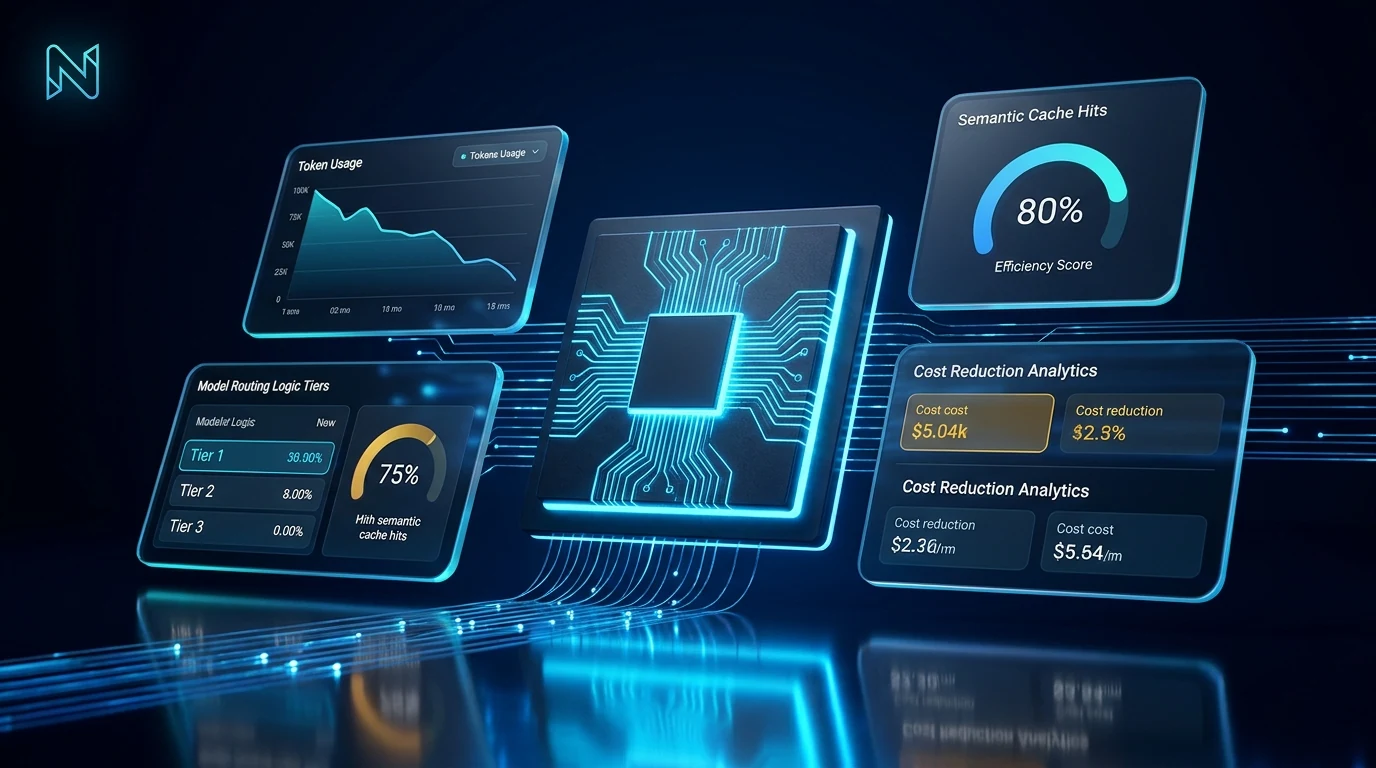
The most effective cost-reduction levers are: 1) Multi-tier model routing (using lightweight models for 80% of routine classification and triage, reserving expensive frontier models only for complex reasoning); 2) Exact and semantic response caching; 3) Prompt compression and schema truncation; and 4) Strict per-tenant quotas and concurrency limits.
Implementing these architectural controls routinely cuts enterprise AI API expenditures by 50% to 80% while simultaneously reducing user-facing latency and improving system reliability.
Why AI API costs escalate unexpectedly
When product teams prototype with frontier models (such as GPT-4o or Claude 3.5 Sonnet), token pricing feels negligible with small test volumes. However, costs scale exponentially with user adoption, chat history accumulation, and background batch jobs.
Common cost multipliers include: 1) Resending entire unpruned conversation histories on every chat turn; 2) Using heavy flagship models for trivial tasks like JSON extraction, sentiment tagging, or FAQ answering; 3) Re-running expensive completions for identical or near-identical prompts; and 4) Lack of output length caps, leading to verbose runaway responses.
Without architectural safeguards, an automated batch workflow or sudden spike in bot traffic can generate hundreds or thousands of dollars in unexpected API fees overnight.
Architectural strategy 1: Multi-tier model routing
Not every query requires a frontier reasoning model. Modern AI engineering employs an intelligent router pattern: incoming requests are first evaluated by a fast, ultra-low-cost model (e.g., GPT-4o-mini, Claude 3.5 Haiku, or Gemini 1.5 Flash).
For simple classifications, form extraction, or factual Q&A, the lightweight model completes the task at less than 5% of the frontier model's cost. If the task exhibits high ambiguity, code generation, or multi-step logic requirements, the router escalates the request to the high-tier model.
This routing pattern dramatically slashes blended cost-per-query while slashing average response latency from 3+ seconds to under 600ms for the majority of user interactions.
Architectural strategy 2: Exact and semantic caching
A surprising percentage of production AI queries are duplicates or semantically equivalent questions. Caching these completions in high-speed datastores (e.g., Redis or Upstash) eliminates redundant model invocations entirely.
Exact-match caching hashes the normalized prompt text and system instructions. If an identical prompt arrives within a designated TTL window, the cached completion returns in sub-10ms at zero API cost.
Semantic caching takes this further by computing vector embeddings of user queries. If an incoming query has a cosine similarity score above a strict threshold (e.g., > 0.96) against a previously verified answer in a vector index, the system returns the cached answer without calling external LLM providers.
Architectural strategy 3: Prompt engineering and schema efficiency
Every character in your system prompt incurs a cost on every single API invocation. Compressing instructions, eliminating redundant examples, and utilizing concise bullet points yields substantial cumulative savings.
When requiring structured JSON responses, utilize native model structured outputs (such as JSON mode or tool calling) rather than extensive prompt-based formatting descriptions that consume hundreds of input tokens.
For chat applications, implement sliding window truncation or rolling summarization: compress older conversation turns into a concise 50-word state summary instead of perpetually resending 20 raw historical messages.
How NUSTFORGE builds cost-efficient AI integrations
NUSTFORGE helps startups and businesses design, build, and optimize production AI integrations that deliver exceptional user experiences within predictable, controlled operating budgets.
Our AI architectures feature intelligent model fallbacks, Redis caching layers, token usage dashboards, automated budget circuit breakers, and custom agent workflows.
Whether you need an intelligent customer support assistant, automated document extraction pipeline, or custom AI-powered SaaS features, we engineer sustainable solutions that scale without budgetary surprises.
Continue reading
Related software guides.
AI Automation
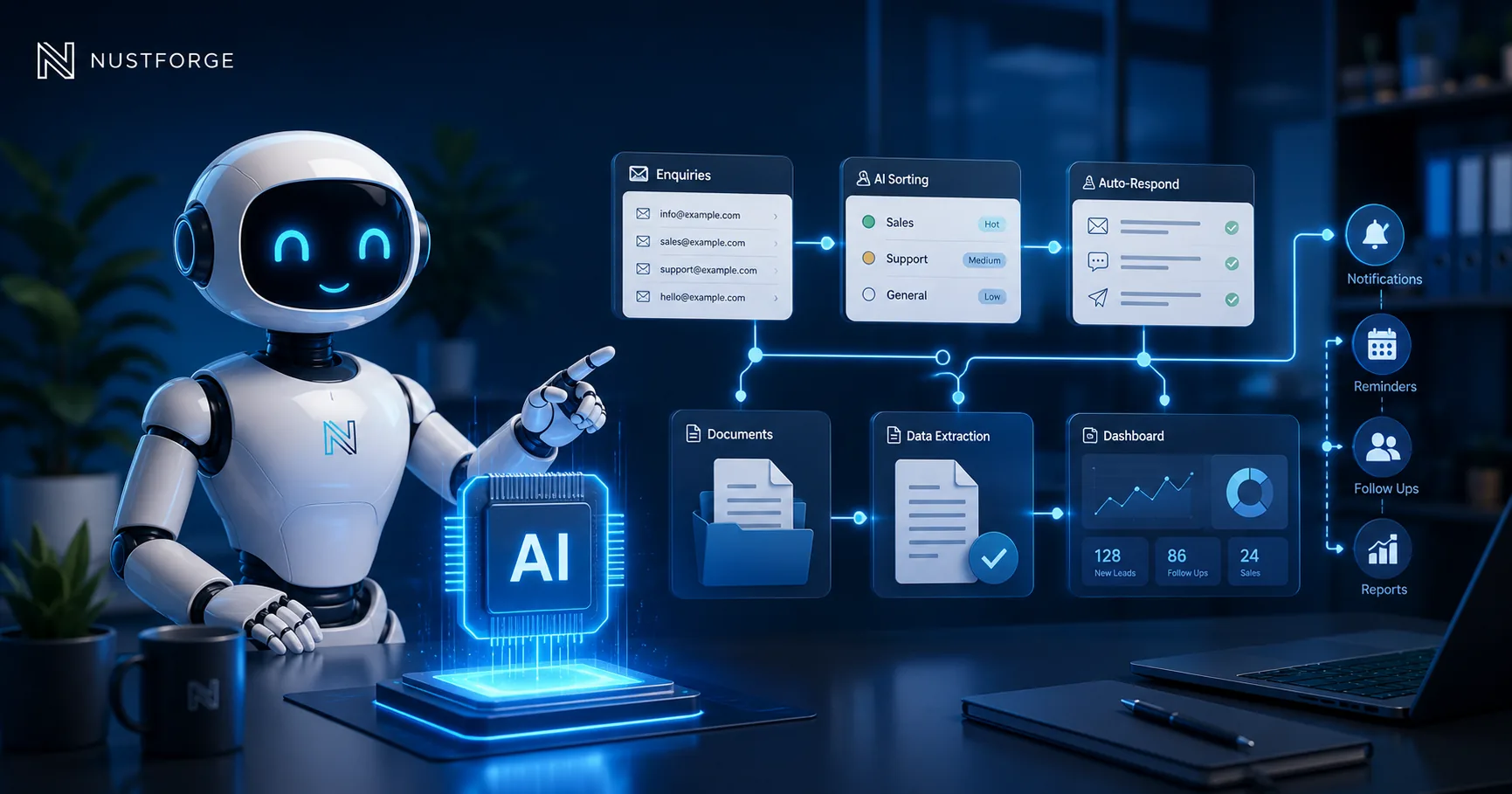
AI Automation for Small Business: What Should You Automate First?
Learn which repetitive tasks small businesses should automate first, where AI adds value, what to avoid, and how to measure a practical first workflow.
Read article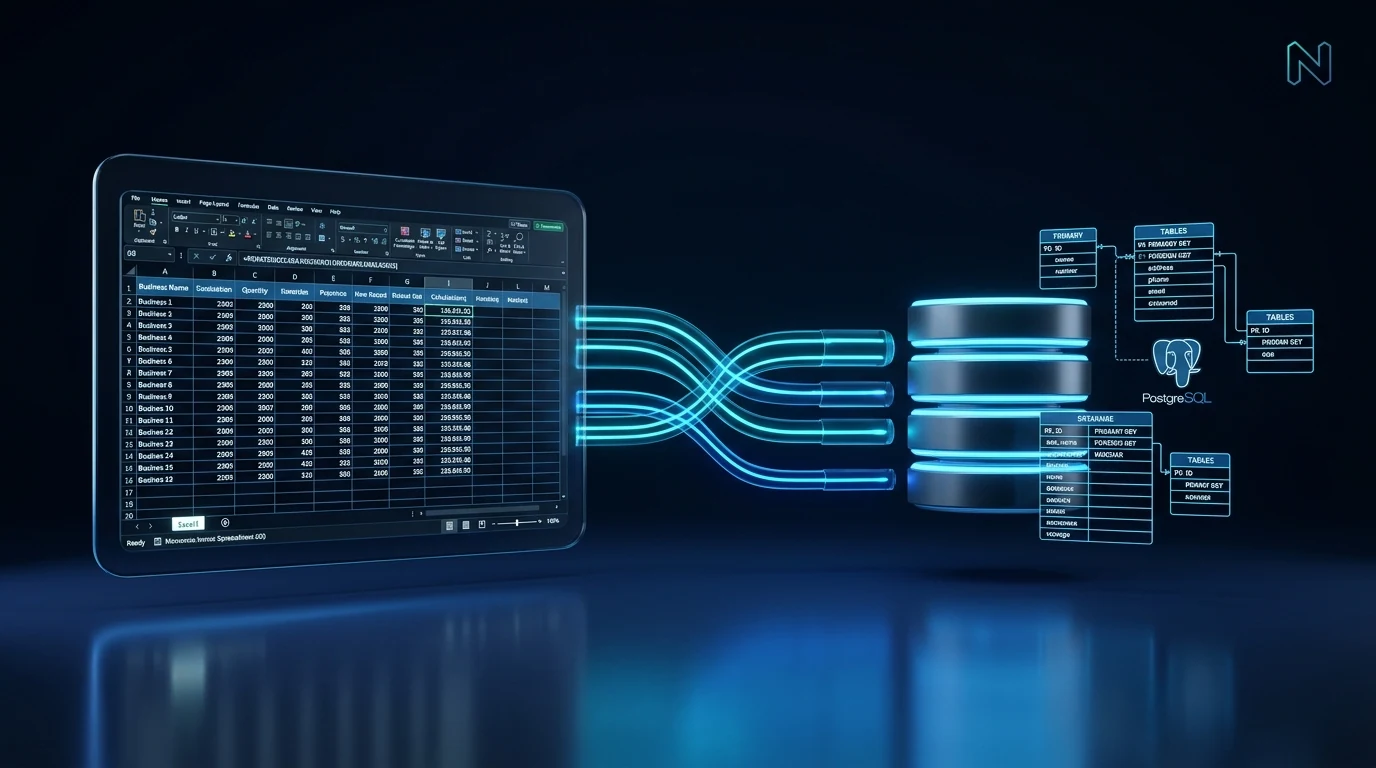
Data Migration & Systems
Excel to PostgreSQL Migration: A Practical Business Data Migration Guide
How to safely transition mission-critical business spreadsheets into normalized PostgreSQL relational databases: data profiling, schema design, ETL, validation, and rollback safety.
Read article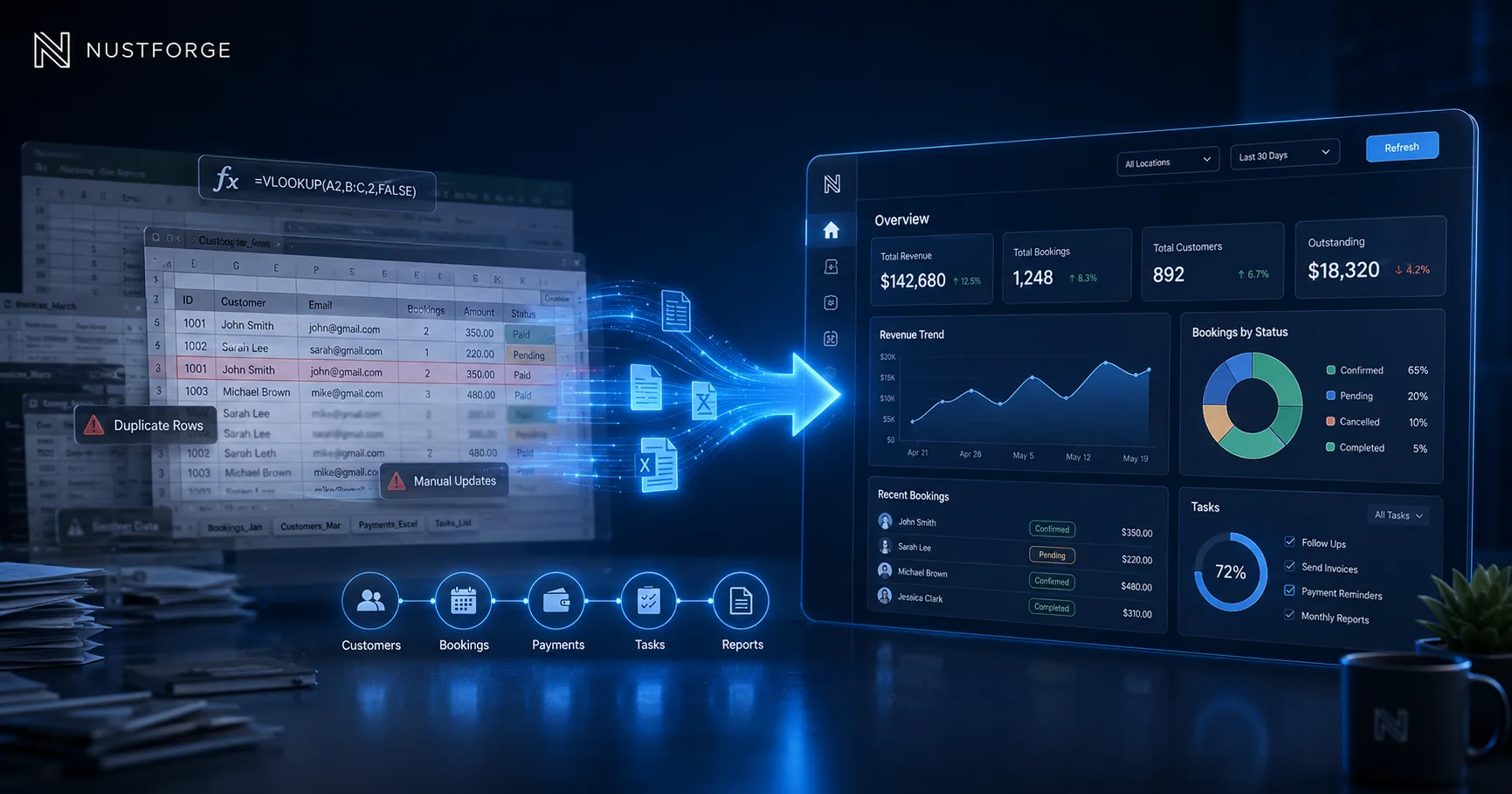
Business Automation
When Should Your Business Move from Spreadsheets to a Dashboard?
Identify when spreadsheets cause data errors and slow down operations, and learn when a custom dashboard delivers the role permissions and visibility you need.
Read articleOptimize your AI spending
Looking to scale AI features without spiraling API bills?
NUSTFORGE builds cost-governed AI workflows with semantic caching, intelligent routing, and fallback tiers.