
SaaS Development
SaaS Multi-Tenancy: Architecture, Tenant Isolation and Scalability
A comprehensive engineering guide to SaaS multi-tenancy models, PostgreSQL row-level security, tenant data isolation, noisy neighbor mitigation, and database scaling.
On this page
Quick answer
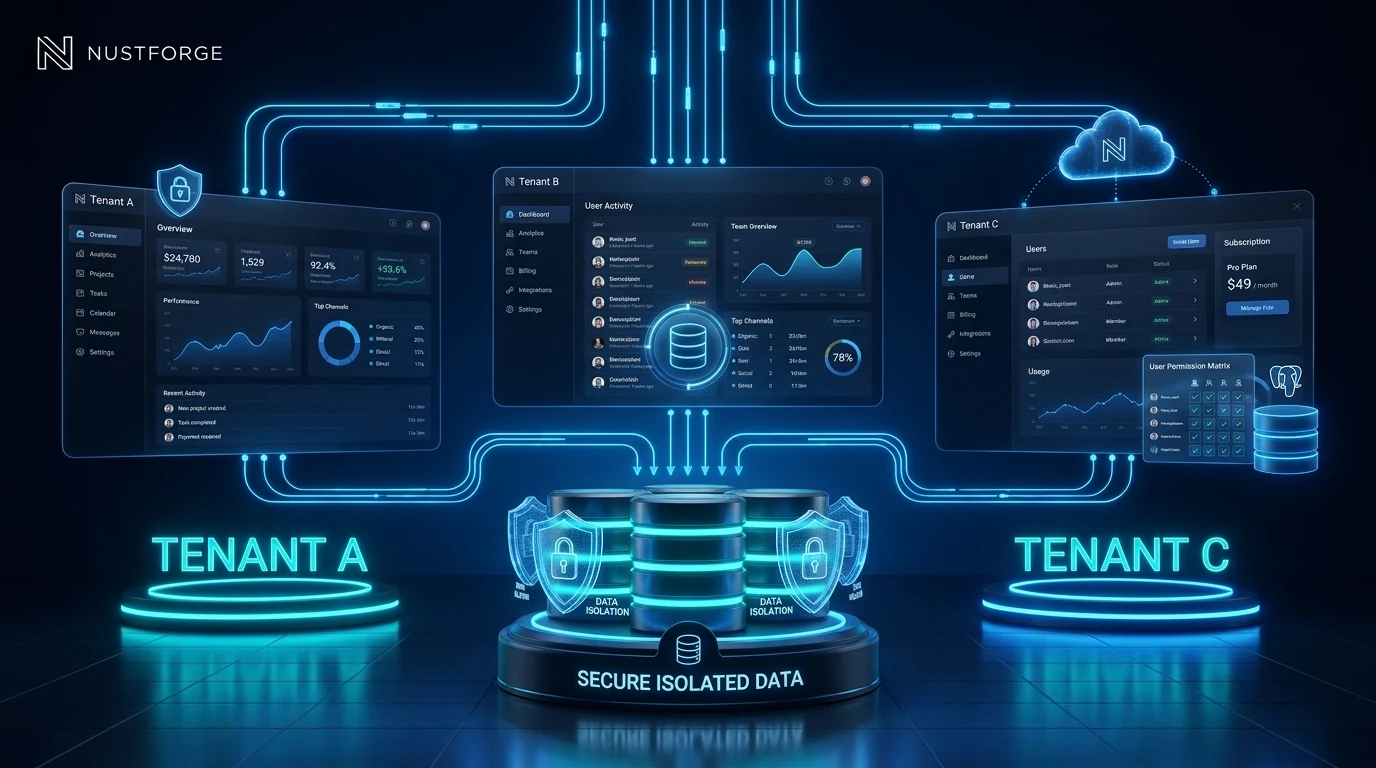
Multi-tenancy is an architectural model where a single software instance and database infrastructure serves multiple distinct customer organizations (tenants), while ensuring each tenant's data remains strictly isolated and confidential.
The three primary multi-tenancy models are: 1) Shared Database, Shared Schema (logical separation via tenant IDs and Row-Level Security); 2) Shared Database, Separate Schemas (schema-per-tenant separation); and 3) Database-per-Tenant (isolated physical or containerized databases).
For most early-stage and growth B2B SaaS platforms, a Shared Database with PostgreSQL Row-Level Security (RLS) offers the optimal balance of development velocity, low operational infrastructure overhead, and robust mathematical isolation guarantees.
Understanding the three multi-tenancy models
In a Shared Database, Shared Schema model (often called the pool model), all customer data resides in the same database tables. Every record contains a tenant identifier column (e.g., tenant_id). This model achieves maximum hardware utilization, simplified migration scripts, and minimal maintenance overhead, but requires uncompromising application-level and database-level query scoping to prevent cross-tenant data leakage.
The Shared Database, Separate Schemas model allocates a distinct PostgreSQL schema for each tenant within a shared database cluster. This provides stronger structural separation and allows tenant-specific schema customisations, but increases migration complexity as schema alter commands must execute across hundreds or thousands of tenant namespaces.
The Database-per-Tenant model (silo model) provisions an independent database instance for each tenant. This provides maximum isolation and satisfies stringent enterprise compliance or data sovereignty requirements, but significantly increases infrastructure costs, connection overhead, and operational maintenance burdens.
Implementing PostgreSQL Row-Level Security (RLS)
Relying solely on application code (such as an ORM where clause) for tenant isolation introduces severe risks: a single developer mistake or unconstrained query can inadvertently expose another customer's proprietary records.
PostgreSQL Row-Level Security (RLS) solves this vulnerability by enforcing security predicates directly at the database engine kernel. When RLS is enabled on a table, the database verifies that every SELECT, INSERT, UPDATE, and DELETE statement matches an active session tenant variable.
In practice, your application sets a session configuration parameter (e.g., SET LOCAL app.current_tenant_id = 'tenant-uuid') at the start of each transaction or connection checkout. The RLS policy then transparently ensures that only rows where tenant_id matches the session variable can be read or mutated, rendering cross-tenant data leaks impossible even if application queries omit the filter.
Mitigating the noisy neighbor problem
In shared multi-tenant architectures, a single tenant executing heavy reporting queries, bulk batch imports, or unindexed searches can exhaust CPU, memory, and database connections, degrading performance for all other tenants.
Effective noisy neighbor mitigation requires three foundational controls: 1) Connection pooling with transaction-level pooling (e.g., PgBouncer or Supabase Supavisor) to prevent client connection spikes; 2) Statement timeouts enforced per transaction so unoptimized queries terminate before starving shared resources; and 3) Multi-level rate limiting at the API gateway and tenant tier.
For enterprise tenants with predictable high-volume workloads, adopting a hybrid architecture allows you to dynamically route high-tier customers to dedicated read replicas or isolated database shards while keeping standard tiers on the pooled cluster.
Tenant-aware migration and schema evolution
Schema evolution is straightforward in shared-schema setups because standard database migration tools (Prisma Migrate, Drizzle Kit, Flyway) run once against the unified schema. However, zero-downtime requirements demand expand-and-contract migration patterns.
When adding new required columns or modifying foreign key structures, migrations should always be deployed in non-breaking phases: first add nullable columns, deploy application code that writes to both old and new structures, backfill existing records asynchronously by tenant batch, and finally enforce constraints in a subsequent release.
Automated integration test suites must execute against dedicated test tenants to rigorously verify that migrations, cascade deletions, and index updates preserve tenant boundaries under high concurrency.
How NUSTFORGE architects scalable SaaS platforms
At NUSTFORGE, we architect production B2B SaaS platforms with enterprise-grade tenant isolation, resilient database schemas, and clean multi-tenant authorization workflows.
Our engineering team has built and deployed complex SaaS systems, including ServiPro (a UK property procurement SaaS) and multi-tenant booking platforms, featuring PostgreSQL RLS, automated tenant provisioning, role-based access control, Stripe subscription lifecycles, and sub-second query performance.
Whether you are architecting a new SaaS MVP or refactoring an existing single-tenant product for multi-tenant scalability, we provide the technical architecture and implementation needed for reliable growth.
Continue reading
Related software guides.
Custom Software Development
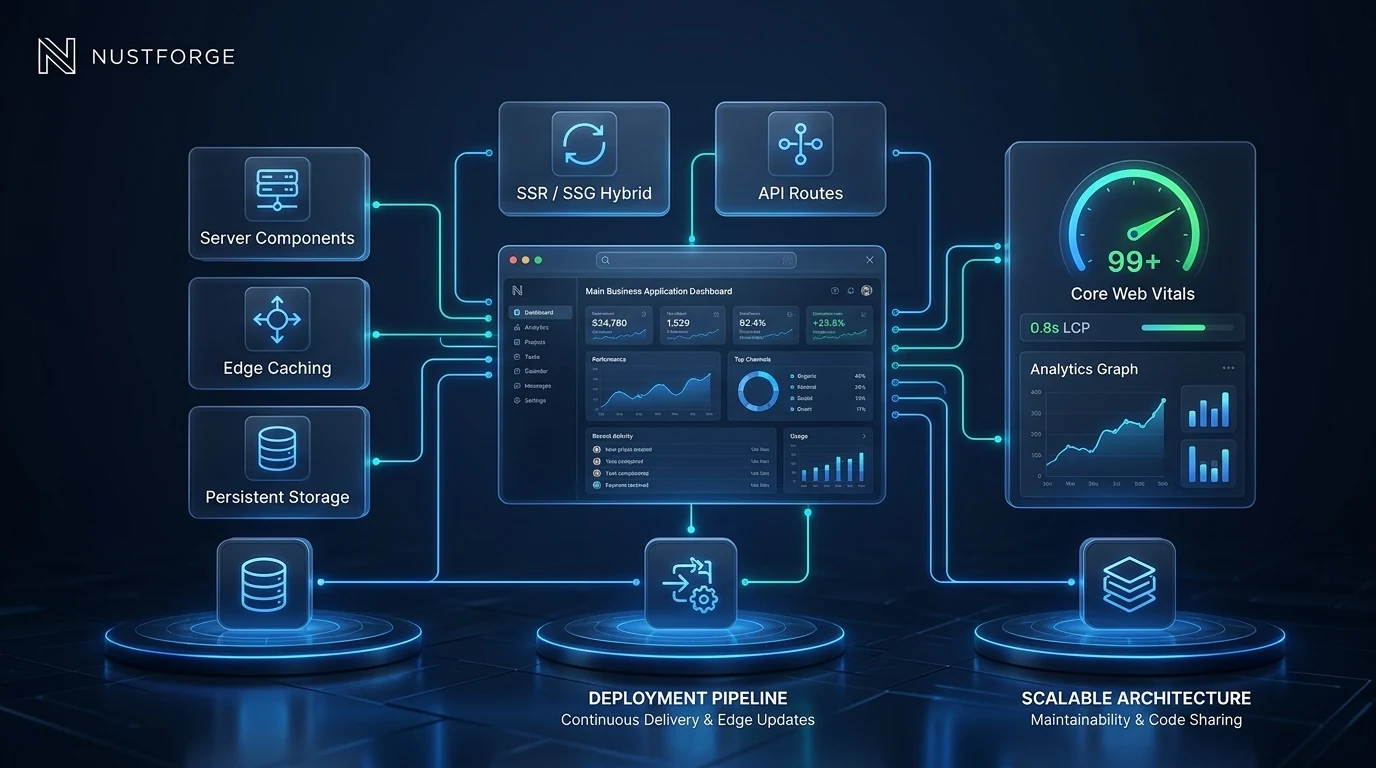
Next.js for Business Applications: Architecture, Performance and Maintainability
Explore why modern enterprises choose Next.js App Router for business portals: Server Components, streaming SSR, edge caching, Core Web Vitals, and type safety.
Read article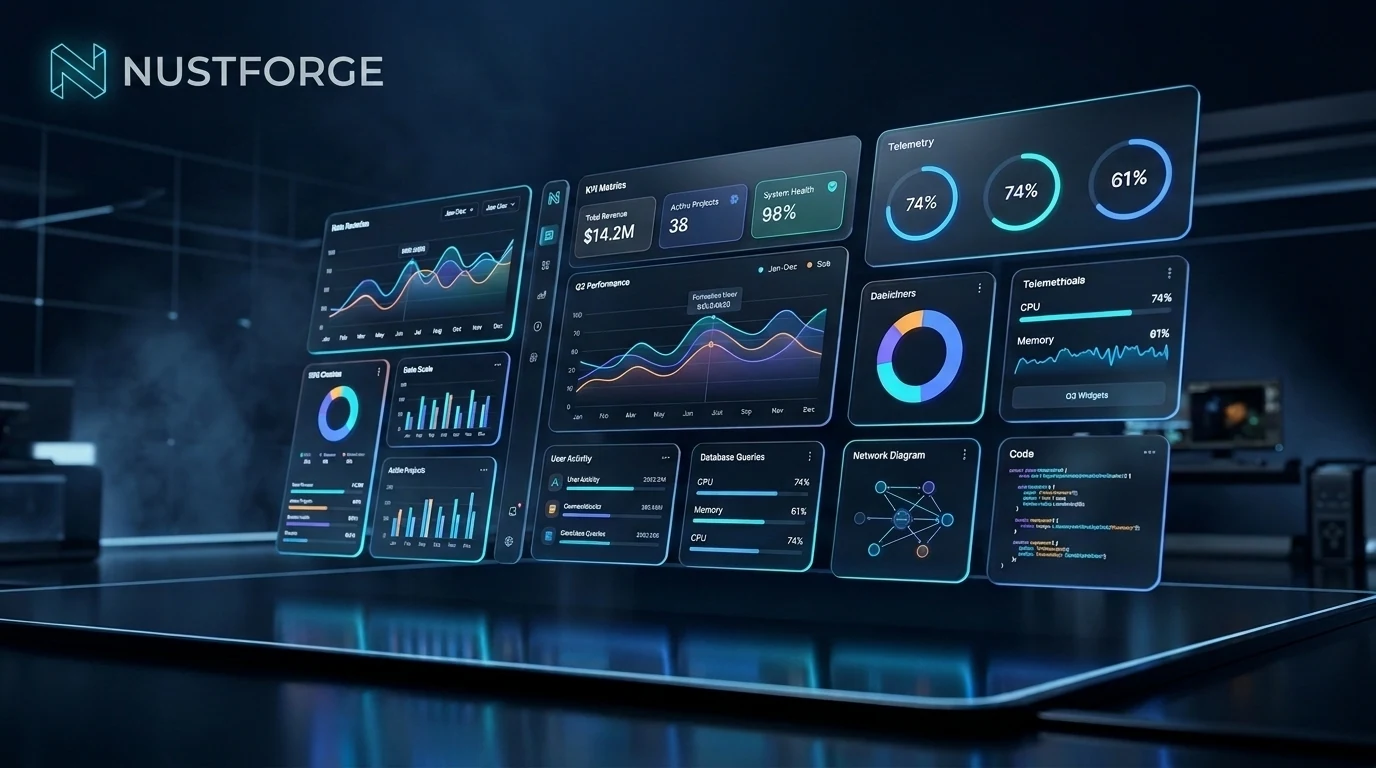
Business Software
Custom Business Dashboards: Features, Architecture and Development Considerations
Discover when to transition from spreadsheets to custom business dashboards, key architectural layers, real-time KPI pipelines, role-based access control, and TCO.
Read article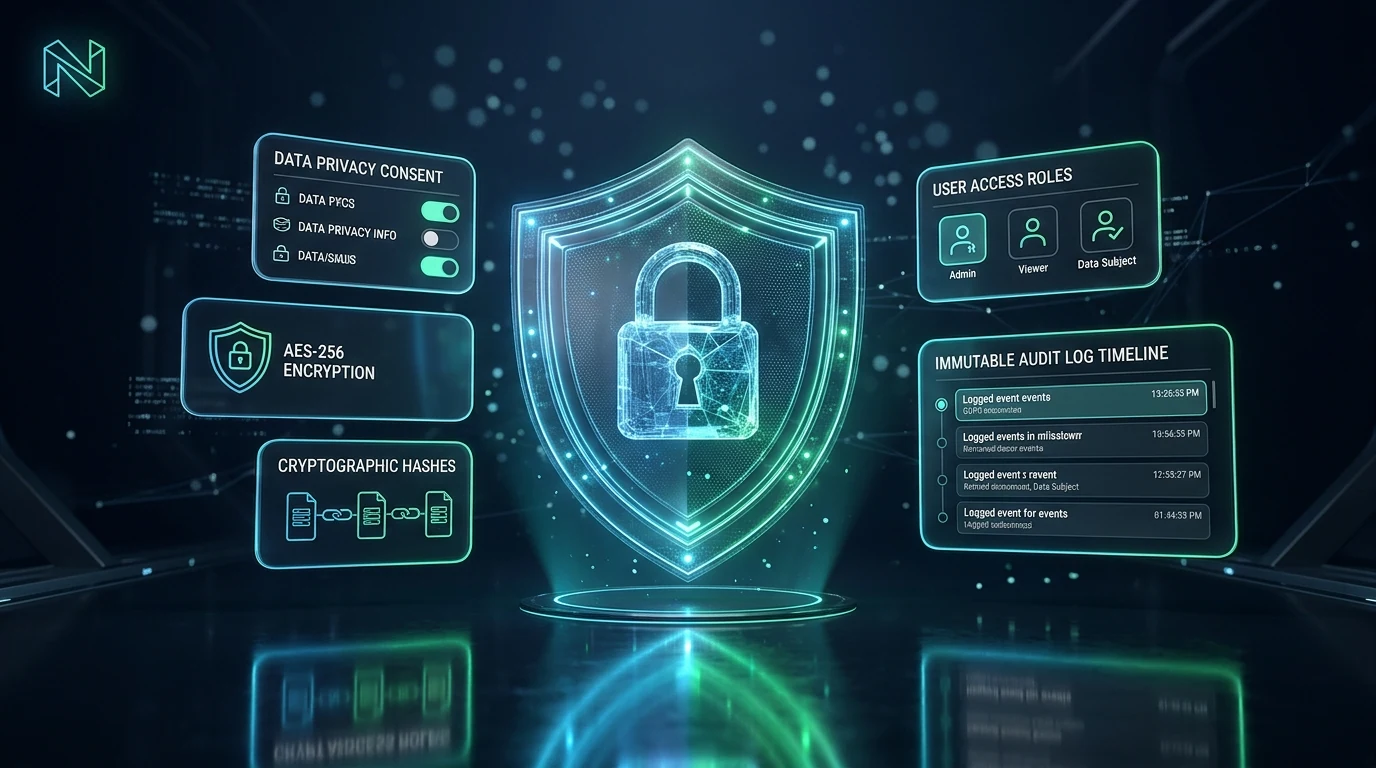
Privacy & Security
GDPR and HIPAA in Software Development: Privacy and Compliance Considerations
An engineering overview of technical compliance: AES-256 encryption, immutable audit trails, role-based access, data subject rights, and secure software architectures.
Read articleArchitect your SaaS platform
Planning a multi-tenant B2B SaaS architecture?
Discuss tenant isolation models, database schema design, and scaling strategies with NUSTFORGE engineering.